Events
Riso Horse Project 2026
Jun 29, 2026
Buck
The Idea
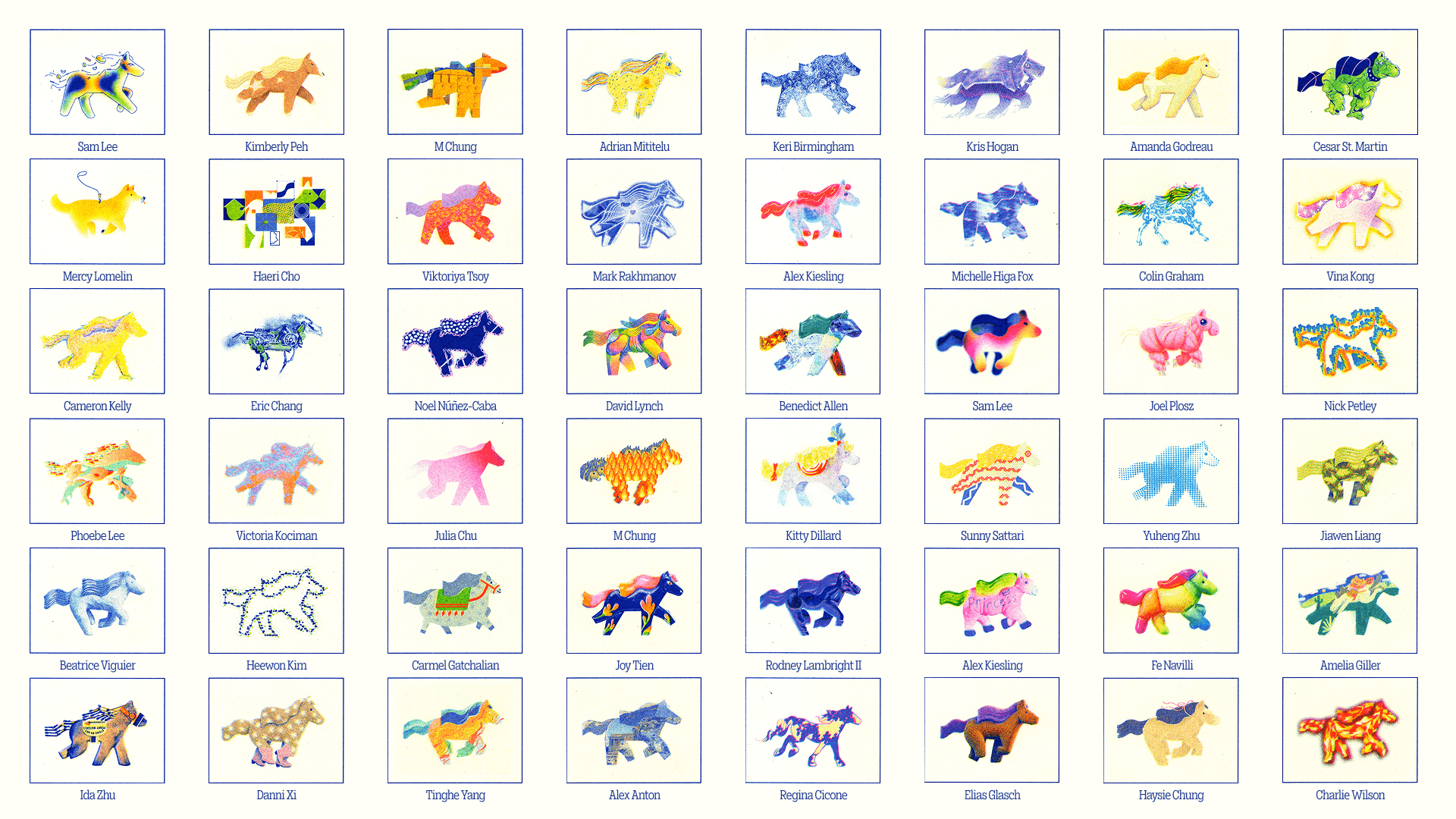
Residence produced a collaborative animation project to celebrate the Lunar New Year of the Fire Horse in 2026. The project invited creatives from across the network to each claim one frame of a shared run cycle and make it their own using risograph printing, a medium that's equal parts printmaking and happy accident.
The inspiration goes back to 1878, when Eadweard Muybridge lined up cameras along a racetrack and captured a horse mid-gallop, frame by frame. It became one of the earliest foundations of animation. Riso Horse picks up that thread: same sequence, same subject, but 48 different artists bringing 48 different interpretations to the page.
The result is a single animation made from 48 completely different frames.
The Community
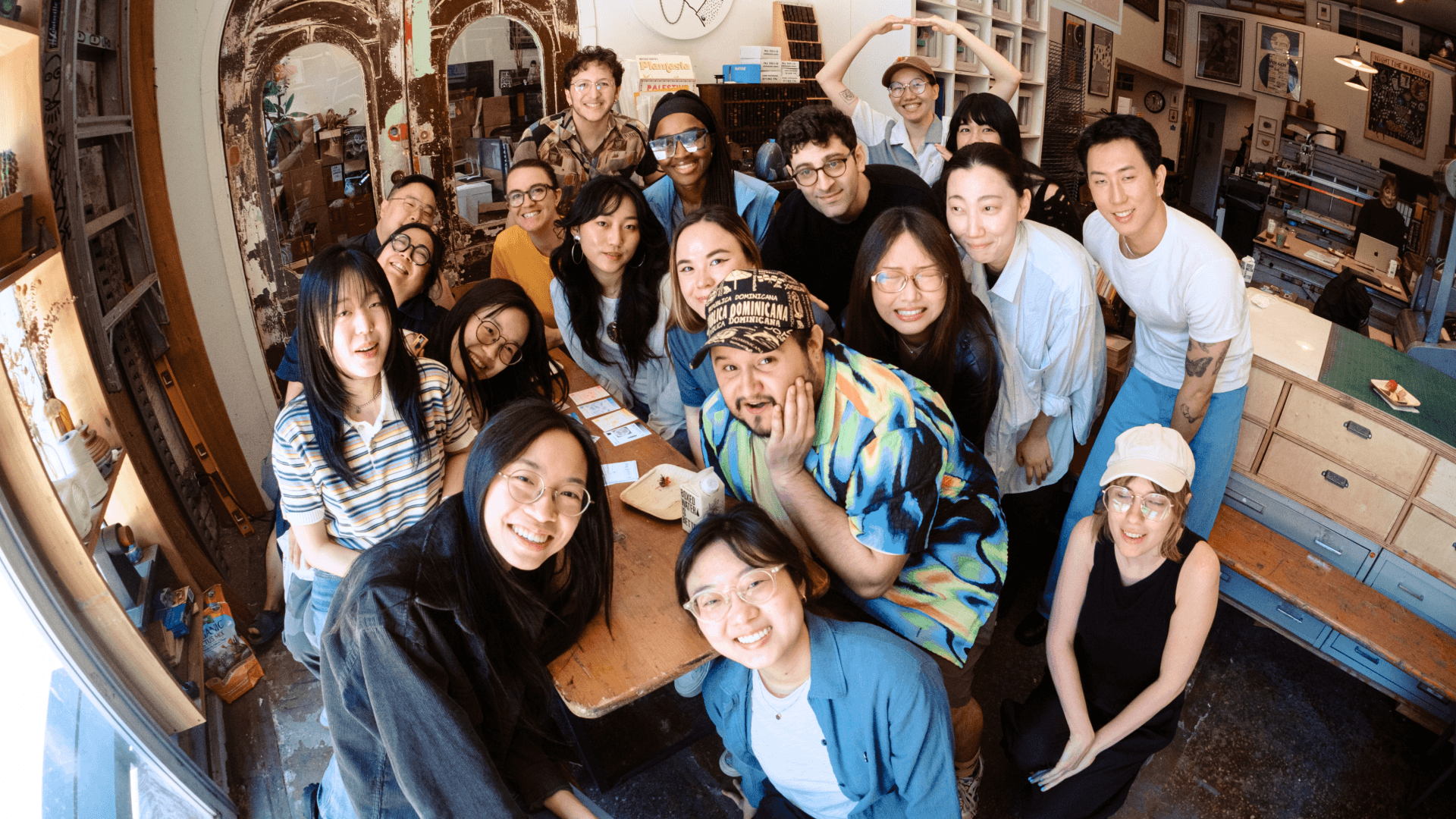
Riso Horse started as an internal prompt: what if people across the network made something together that had nothing to do with client work?
They came from BUCK and Acronym, joining from New York, Los Angeles, and Amsterdam. Some were illustrators. Some were animators. Some had never touched a riso printer. Everyone got one frame.
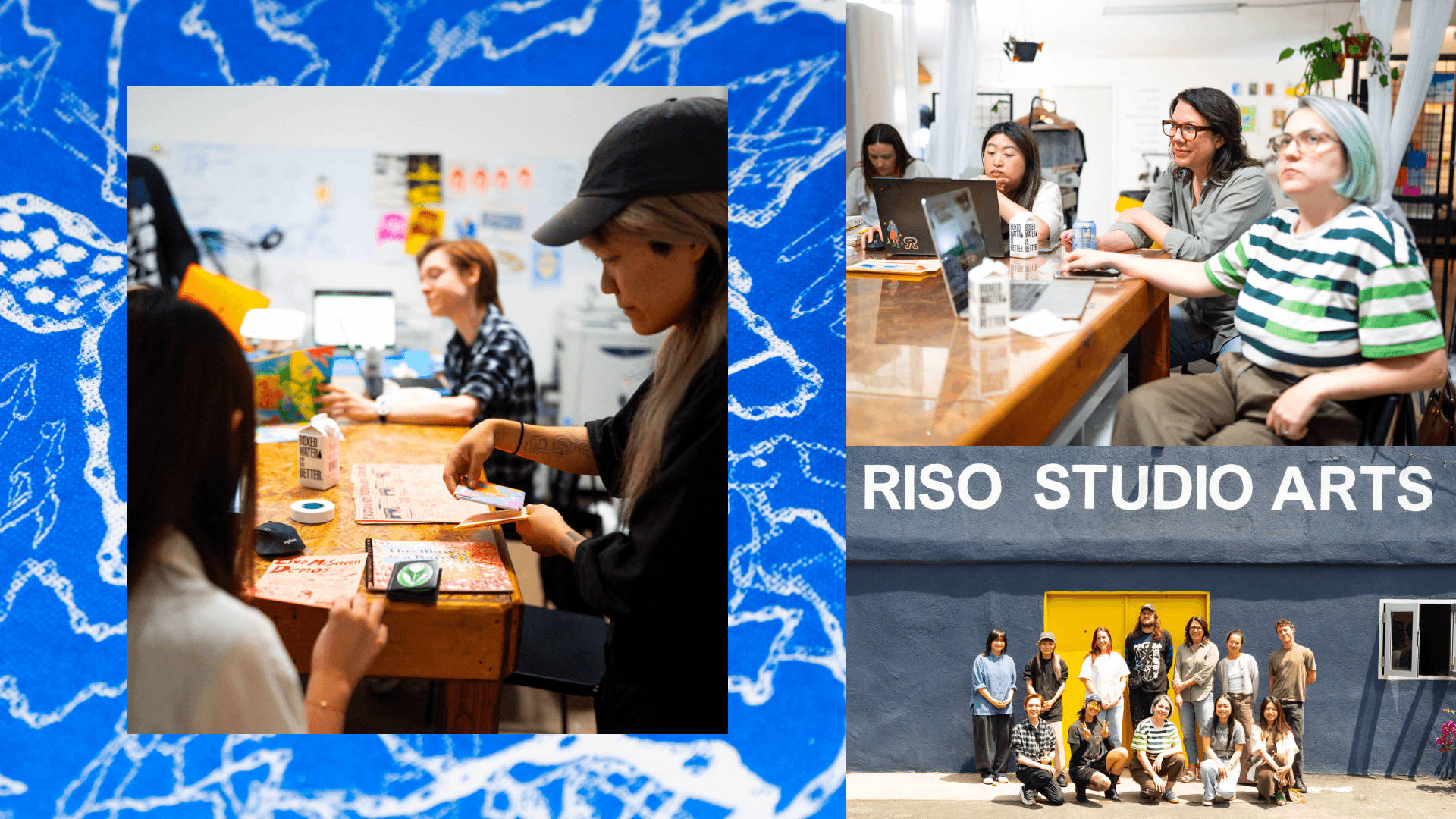
The workshop was led by Kelli Anderson, a designer and risograph animation specialist, with printing sessions hosted at The Arm in Brooklyn and Riso Arts Studio in Los Angeles. Each artist worked from the same run cycle template, a guide that kept the horse's movement consistent across all 48 frames while leaving total creative freedom for everything else. The constraint held the piece together. The people made it worth looking at.
The Craft
Risograph printing works more like screen printing than anything digital. Each color is printed separately, one pass at a time, using ink-filled drums. The ink is transparent, so colors overlap on paper and mix to create new tones on their own. You don't fully control it. That's the point.
The project used a faux CMYK approach, separating each artist's work into four grayscale layers (Aqua, Fluorescent Pink, Yellow, Black) to simulate full-color printing through layered riso passes. Artists prepped their files in Photoshop using Spectrolite, a color separation tool built specifically for riso workflows, then printed on-site at the studios.
The animation itself is a 6-frame run cycle at 6 frames per second, built from all 48 unique prints. Every frame went through the same technical process but came out looking completely different, because every artist brought a different hand to the same horse.

The Result
One animation, built from 48 completely different frames.
Every participant received a physical riso print of their individual frame, a collective poster featuring all frames in sequence, and a digital version of the final animation. The prints were consolidated and shipped to Residence offices across the network for distribution.
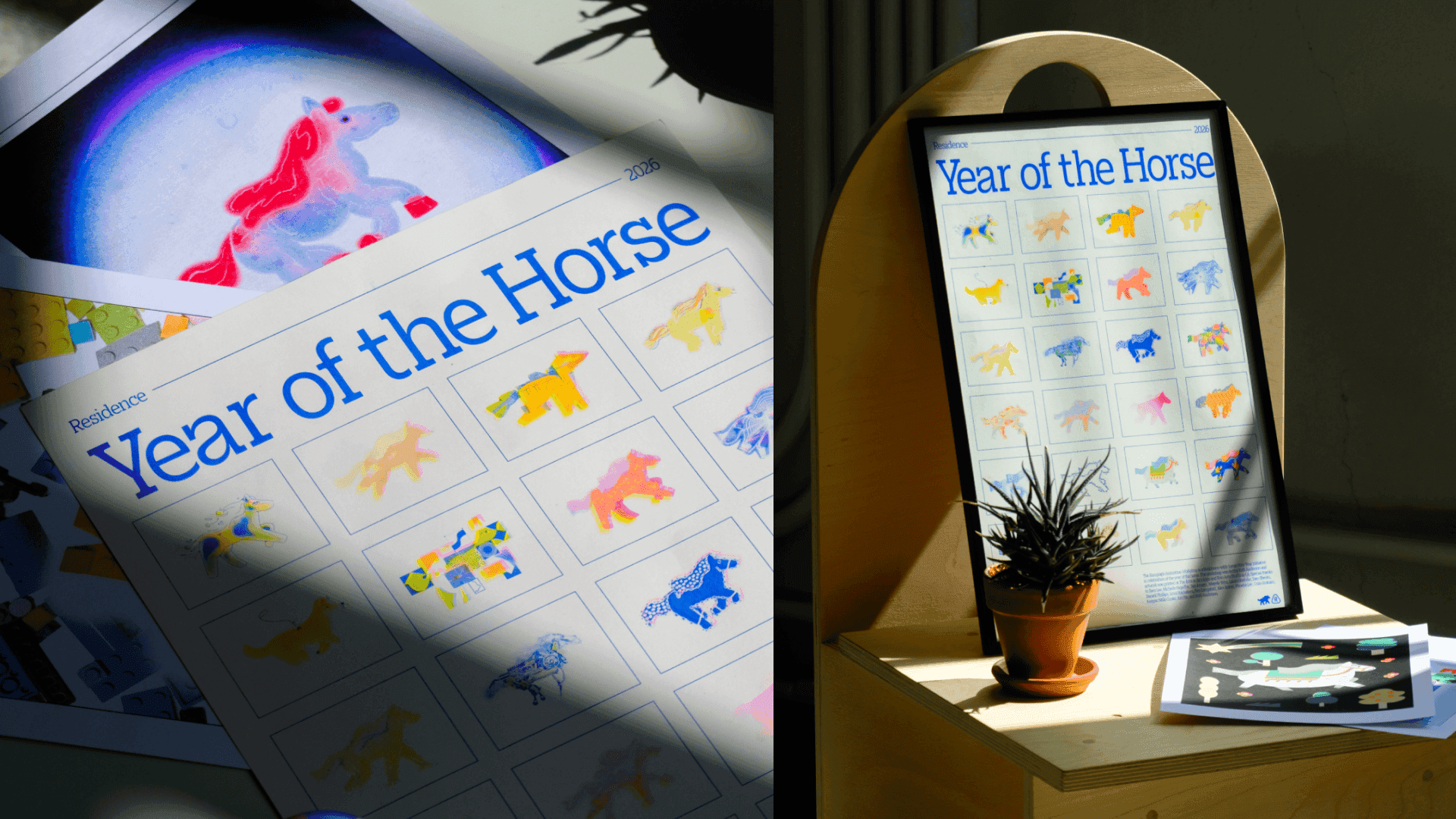
No client. No brief. Just a room full of people making something none of them could have made alone.